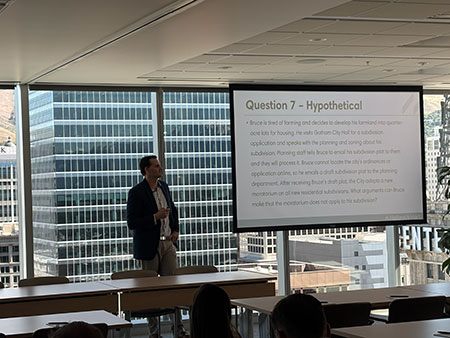
DAY 1
From AI governance to Utah water law to transaction readiness, our speakers brought practical, real-world insight to a packed room of in-house counsel in Salt Lake City.
Here's what we covered.
Presentation: AI Governance and AI Laws in the U.S.
Presenter: Alex Kimata
- AI legal compliance requires navigating a patchwork of agency enforcement, evolving executive orders, and an expanding wave of state-level legislation
- AI governance builds on your existing compliance program—it extends proven privacy, security, and risk management practices rather than replacing them
- Proactively audit your AI vendor contracts, map your AI use cases to applicable laws, and identify your highest-risk deployments for focused oversight
Presentation: Tapping In: A Practical Guide to Water Rights for Development in Utah
Presenters: Melissa Reynolds, Katy Brautigam
- Most of Utah's water is already appropriated; acquiring existing rights and filing change applications is the norm
- Water rights transfer like real estate, but due diligence looks very different
- Confirm the amount of water needed for planned development and ensure that you purchase enough water
Presentation: Preparing for Equity Financings and Liquidation Transaction
Presenters: Jason Perry, Lindsay Manning
- Laying the legal groundwork well in advance can determine if a deal closes at all
- Your cap table must account for every warrant, SAFE, convertible note, and option grant
- Change of control provisions buried in contracts can surface at the worst moment
Presentation: Public and Private Securities Offering
Presenter: Dane Johansen
- Private doesn't mean unregulated, the exemption you choose carries real compliance obligations
- 506(b) vs. 506(c) comes down to two central questions: do you want to publicly solicit investors and do you want to include unaccredited investors?
- Bad actor screening, Form D, and blue sky filings apply to every Reg D offering
Presentation: Utah Legislative and Tax Updates 2026
Presenters: Kate Bradshaw, Liam Thrailkill, Steve Young
- The 2026 session brought changes across energy, housing, land use, and government operations
- A new targeted advertising tax was opposed on companies with $100M+ in global ad revenue and over $1M in Utah
- Utah's income tax rate dropped from 4.5% to 4.45%
Presentation: Professionalism & Civility: Ethical Boundaries for In-House Counsel]
Presenters: Steven Suflas, Parker Airmet
- With nearly 80% of legal professionals using AI, the question isn’t whether, but how, to use it responsibly
- The Rules of Professional Conduct apply to attorney use of AI
- Utah courts have already sanctioned attorneys for filing AI-generated citations that don't exist
- AI amplifies civility risks. Speed and scale remove the natural "cooling off" that keeps professional interactions in check
DAY 2
Day 2 brought more of what in-house counsel actually need—practical guidance on innovation funding, real estate development, employment risk, and ethics.
Here's what we covered on Day 2.
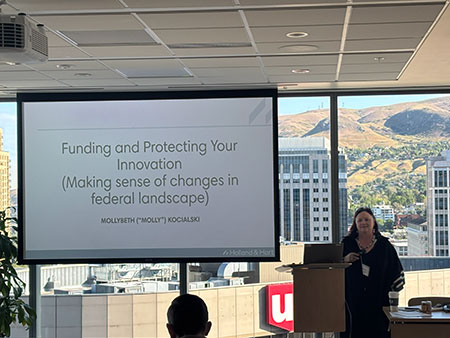
Presentation: Funding and Protecting Your Innovation (Making Sense of Changes in the Federal Landscape)
Presenter: Molly Kocialski
- Funding and Protecting Innovation has changed significantly in the last 18 months and will continue to change
- Know the identify of your PIs and grantees so you can meet new funding requirements
- Strategize the most important ideas/businesses before you seek SBIT/STTR funding
- Quality of assets protecting innovation is your responsibility.
Presentation: Utah Legislative Update: Land Use, Development Incentives, Subdivision Law, and Federal Compliance]
Presenter: Michael Hutchings
- Utah's 2026 session reshaped TIF and developers now have two paths to tax increment financing
- Cities must publish all land use ordinances, fees, and checklists online—a new vesting rights opportunity for developers
- As of July 2026, city councils can no longer serve as land use appeal bodies
Presentation: Navigating Difficult Employee Situations: Practical Discipline Strategies and Liability Protection
Presenter: Greg Saylin
- Before you discipline or terminate, check for recent protected activity—wage complaints, leave requests, or accommodation requests
- Criminal allegations require careful navigation of leave, investigation, and workforce safety
- A well-structured severance offer can meaningfully reduce litigation risk
Presentation: Ethics Guidance for In-House Counsel
Presentera: Eric Maxfield, Cory Talbot
- AI tools create real ethical exposure. What you feed into AI tools may not stay confidential, and what you get out may not be accurate
- Attorney-client privilege is easily waived; be intentional about who is copied, what is written, and whether you are giving legal or business advice
- If you practice in Utah, even as in-house counsel, licensure rules apply. If litigation is on the horizon, engage an outside litigator early and often